
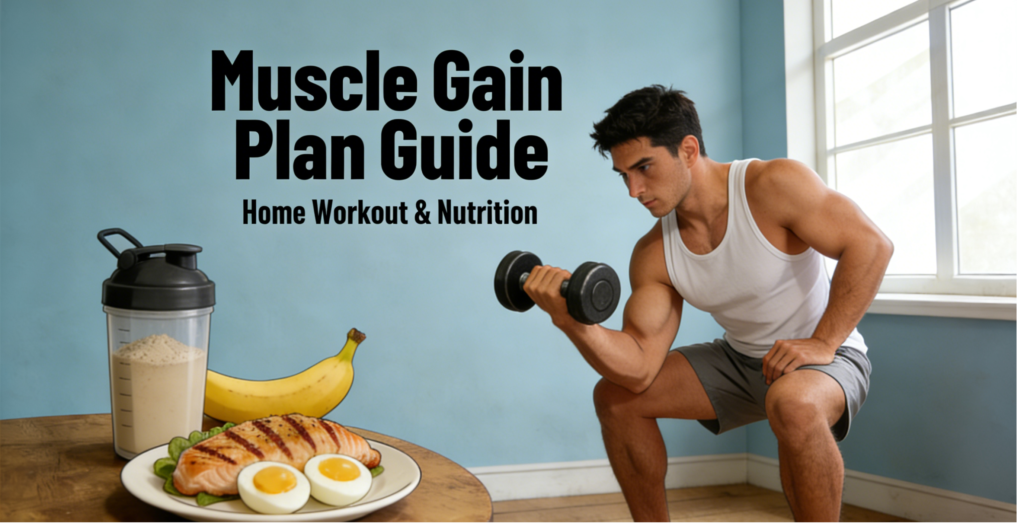
If you’re a beginner trying to build muscle, you might feel confused about where to start. Many beginners struggle with muscle gain because they don’t have a clear workout and diet plan. The truth is, building muscle requires both the right training and the right nutrition, combined into a simple and consistent plan. This is especially helpful for beginners trying to gain muscle at home. In this guide, you’ll learn a complete muscle gain plan for beginners, including a home workout routine, a simple diet strategy, and tips to stay consistent. Whether you’re a skinny guy or just starting your fitness journey, this plan will help you build muscle effectively without overcomplicating things.
Why You Need a Muscle Gain Plan
Many beginners fail to gain muscle not because they lack effort, but because they don’t follow a structured plan. Without a clear direction, it’s easy to train randomly, skip meals, or stay inconsistent. A proper muscle gain plan helps you stay focused on the basics: training regularly, eating enough protein, and giving your body time to recover. When these elements work together, your body can build muscle more efficiently. Instead of guessing what to do each day, having a simple plan removes confusion and makes it easier to stay consistent over time.
To break it down further, muscle growth—scientifically called hypertrophy—relies on three non-negotiable factors: consistent mechanical tension from resistance training, adequate muscle damage from challenging workouts, and proper recovery fueled by nutrition and rest. A structured plan ties all these pieces together, ensuring you’re not just “going through the motions” but working intentionally. Without it, you risk overtraining certain muscles (like biceps, which are easy to fixate on) while neglecting others (like your back or legs, which are foundational for overall strength and muscle balance). This leads to postural imbalances, slower progress, and even injury over time. Additionally, a plan lets you track your progress—whether it’s adding one more rep or lifting a little more weight—which keeps you motivated when results feel slow.
Beginner Workout Plan at Home

You don’t need a gym to start building muscle. A simple home workout routine can be very effective for beginners if done consistently. The key is to focus on basic compound movements—exercises that train multiple muscle groups at once—because they maximize muscle engagement and efficiency, which is perfect for beginners who want to build a strong foundation.
Push-ups, for example, target your chest, shoulders, and triceps all in one movement. Squats work your quads, glutes, and hamstrings, while also engaging your core for stability. Planks strengthen your entire core—including your abs, lower back, and obliques—which supports better posture and helps prevent injury during other exercises. These movements require no equipment, making them accessible for anyone just starting out.
A simple, beginner-friendly home routine could look like this:
Push-ups: 3 sets of 8–12 reps (modify by kneeling on the floor if full push-ups are too hard)
Bodyweight Squats: 3 sets of 12–15 reps (keep your chest up, knees over toes, and lower until your thighs are parallel to the floor)
Plank: 3 sets of 30–60 seconds (keep your body in a straight line from head to heels, engaging your core to avoid sagging or lifting your hips)
Glute Bridges: 3 sets of 15 reps (lie on your back, knees bent, feet flat on the floor; lift your hips until your body forms a straight line from shoulders to knees, squeezing your glutes at the top)
Bent-Over Rows (use water bottles or light dumbbells if available): 3 sets of 10–12 reps per arm (hinge at your hips, keep your back flat, and pull the weight toward your chest)
Train 3 to 4 times per week, allowing at least one day of rest between workouts for the same muscle groups. The most important concept here is progressive overload—gradually increasing the intensity of your workouts over time. This could mean adding one more rep per set, holding a plank 10 seconds longer, or using slightly heavier weights (like upgrading from water bottles to dumbbells). Progressive overload is what signals your body to build more muscle, so don’t stay stagnant—keep challenging yourself gently. If you need a more detailed routine, you can check out this beginner home workout plan.
Simple Diet Plan for Muscle Gain
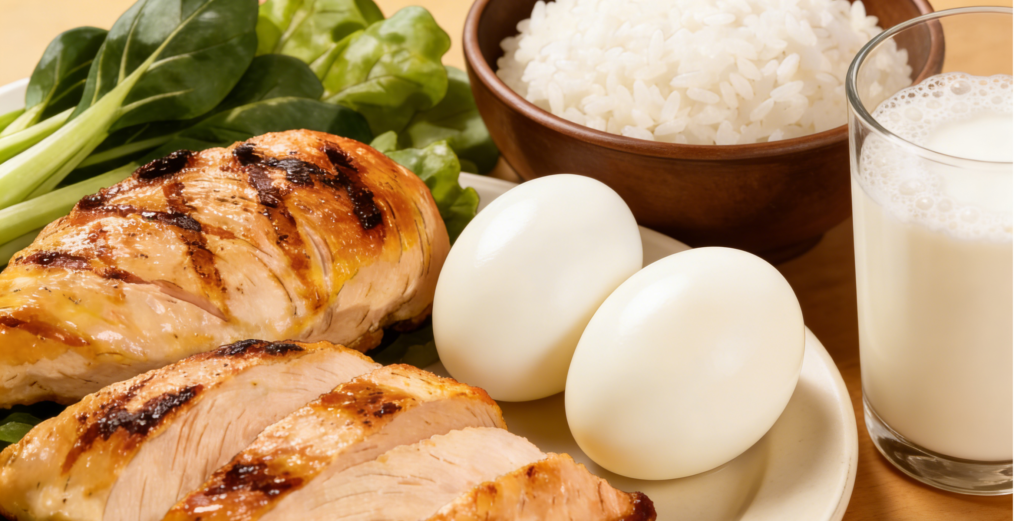
Training alone is not enough to build muscle. Without proper nutrition, your body won’t have the resources it needs to repair and grow muscle tissue after workouts. Think of your diet as the “fuel” for muscle growth—you can’t build a strong house without the right materials, and you can’t build muscle without the right nutrients.
The most important factor in your muscle gain diet is protein intake. Protein is made up of amino acids, which are the building blocks of muscle. As a beginner, aim for around 1.6–2.2 grams of protein per kilogram of body weight each day. For example, if you weigh 70 kilograms, that’s 112–154 grams of protein daily. This ensures your muscles have enough amino acids to repair and grow stronger after each workout.
In addition to protein, you also need to eat enough calories. If you’re not gaining weight, you’re probably not eating enough—your body needs a slight calorie surplus (10–15% more than your maintenance calories) to have extra energy to build muscle. You don’t need to count every calorie, but focus on eating balanced meals that include protein, complex carbs, healthy fats, and vegetables.
A simple, easy-to-follow daily meal plan could look like this:
Breakfast: 2–3 eggs (scrambled or boiled), 1 bowl of oatmeal (topped with berries or a tablespoon of peanut butter), and a glass of milk
Snack: 1 small Greek yogurt (high in protein) or a protein shake (if you’re short on time)
Lunch: Grilled chicken breast (120–150 grams), 1 cup of cooked rice (or quinoa for extra fiber), and a large serving of roasted or steamed vegetables (like broccoli, spinach, or bell peppers)
Snack: 1 handful of nuts (almonds, walnuts) or a piece of fruit (banana, apple) with a tablespoon of peanut butter
Dinner: 150 grams of lean beef, fish (salmon, tuna), or tofu (for vegetarians), 1 cup of mashed potatoes (or sweet potatoes for extra nutrients), and a side of mixed greens
The key is to keep your diet simple and sustainable. You don’t need to cut out any foods entirely (unless you have dietary restrictions), but focus on whole, unprocessed foods most of the time. If you want more food ideas or need help figuring out how to hit your protein goals, you can check out best high protein foods for muscle gain.
Weekly Routine Example

Having a weekly routine makes it easier to stay organized and consistent—and consistency is everything when it comes to building muscle. As a beginner, you don’t need to train every day; rest and recovery are just as important as your workouts. Your muscles grow while you rest, not while you’re lifting weights, so giving your body enough time to recover is crucial to avoiding burnout and injury.
Here’s a simple, beginner-friendly weekly plan you can follow. It balances workouts, rest, and light activity to keep you consistent without overtraining:
Monday: Full-Body Home Workout (follow the routine from Section 2)
Tuesday: Rest Day (focus on recovery—stretch, drink plenty of water, and get 7–9 hours of sleep)
Wednesday: Full-Body Home Workout (repeat Monday’s routine, or switch up one exercise to keep it interesting)
Thursday: Rest Day (you can do light activity like a 20-minute walk if you feel energetic, but avoid intense exercise)
Friday: Full-Body Home Workout (try to add a little progressive overload—e.g., one more rep per set or a longer plank)
Saturday: Light Activity (go for a 30-minute walk, do some yoga, or stretch—this keeps your body moving without straining your muscles)
Sunday: Rest Day (completely relax, prioritize sleep, and prepare meals for the week ahead to set yourself up for success.
This schedule gives your muscles 48 hours of rest between workouts, which is ideal for beginners. As you get stronger (after 4–6 weeks), you can adjust the intensity—for example, adding more exercises, increasing weights, or splitting your workouts into upper-body and lower-body days. But for now, keep it simple—consistency is more important than complexity. This weekly routine is a big advantage for beginners, because it takes the guesswork out of your week and helps you build a sustainable habit.
Tips to Stay Consistent
Consistency is the most important factor in building muscle—more important than perfect workouts or a perfect diet. Many beginners quit too early because they expect fast results, but muscle gain takes time (usually 4–8 weeks to see noticeable changes). The good news is that small, consistent steps add up over time, so focus on showing up every day, even if it’s not “perfect.”
Here are some practical tips to help you stay consistent:
Start with small, manageable goals. Instead of trying to work out 5 times a week or eat perfectly, start with 3 workouts a week and focus on eating protein at every meal. Once that becomes a habit, you can add more.
Track your progress. Keep a workout journal (or use a fitness app) to log your sets, reps, and weights. You can also take monthly progress photos or measure your arms, chest, and legs. When you see even small improvements, it will motivate you to keep going.
Make it convenient. Prepare your workout clothes the night before, pre-cook meals for the week, or schedule your workouts at the same time each day. The easier you make it to stick to the plan, the more likely you are to stay consistent.
Don’t beat yourself up over mistakes. If you miss a workout or eat something “off-plan,” don’t quit—just get back on track the next day. Progress, not perfection, is the goal.
Find accountability. Tell a friend or family member about your muscle gain goals, or join a community of beginners. Having someone to check in with can make a big difference in staying motivated.
If you need a simple step-by-step approach to stay on track and avoid common mistakes, you can follow 5 easy steps to gain muscle at home —it’s designed to help beginners stay consistent and make steady progress.
Conclusion
Building muscle as a beginner doesn’t have to be complicated. You don’t need fancy gym equipment, a strict diet, or hours of training each day. The key is to focus on the basics: a simple home workout routine, a balanced diet with enough protein, and consistent effort over time.
Remember, muscle gain is a slow process—be patient with yourself. You won’t see results overnight, but if you show up for your workouts, eat well, and prioritize rest, you will build muscle. The plan in this guide is designed to be sustainable, so you can stick with it long-term. It’s not about being perfect; it’s about being consistent.
Start with this plan today. Adjust it as you go—if an exercise feels too easy, add more reps or weight; if a meal doesn’t work for you, swap it for something else. The most important thing is to keep going. Every workout, every meal, and every day of consistency brings you closer to your muscle gain goals. You’ve got this!